
Plastic: an archaeological treasure trove

There’s no doubt that plastic is a scourge on the environment, but one archaeologist argues it’s also a useful archaeological archive full of valuable information about us.

Despite being a useful and versatile material, there’s no doubt that plastic is a problem. Almost every piece of plastic created is still in existence in some form or another, whether that be a discarded crisp packet or recycled drink bottle. Plastic is persistent, and while that’s bad news for the environment, archaeologists argue in Cambridge Prism Plastics that plastic reveals important information about us.
Archaeologist Professor John Schofield from the University of York, who was involved in the study, proposes plastics are a valuable treasure trove, and archive that records the activities and behaviours at a crucial time in our human history.
A valuable artefact
“It is easy to view plastics as a toxic legacy and the cause of environmental harm, which of course they are. But as archaeologists we can also view them from another angle entirely – as a valuable archive that documents human impacts on planetary health,” explained Schofield.
“Just as for earlier periods, objects get lost or discarded, deliberately or accidentally. In that moment they go from what anthropologist Michael Schiffer referred to as the systemic context – objects in use – to the archaeological context – as artefacts.”
And these artefacts can travel – whether by the wind, or rivers, ocean currents, or waste management systems – and end up in places that have no direct correlation with the human activity or behaviour it was designed for, or where it was discarded.
Plastics are no different to other materials or artefacts from earlier periods and archaeologists can study them in the same way they might study stone tools or ceramic shards.
“We can use evidence on the items to date them, we can establish their original purpose through their morphology, and we can examine details of their former use through traces of the types of activities that they were once involved with – what archaeologists refer to as 'use wear',” said Schofield. “We can also explore what happened to these objects after they entered the archaeological record, between the time they were used and their discovery. All of this is the same, whether a stone tool, a ceramic sherd, or a plastic bottle.”
The Plastic Age
The Plastic Age began in the 1950s as plastic became a global phenomenon; Tupperware became common, the first polyethylene bag made an appearance, and Lego was invented! Between 1950 and 2017, over 9.2 billion tonnes of plastic has been produced – over half since 2004. However, roughly 14% has been incinerated and only 9% has been recycled.
That means over 75% of all the plastics ever made is lurking in the environment – from the highest of mountains, to the deepest of seas. It’s even orbiting the planet, and pieces have been left on the Moon!
“This archaeological record of the Plastic Age is ubiquitous. This makes the plastic archaeological record distinct,” said Schofield. “Also, unlike earlier periods, it is a contaminant, so a toxic archaeological record. These characteristics say a lot about ourselves and our relationship with the Planet.”
Persistent microplastic snowflakes
Plastic is practical and versatile, but it’s also persistent; it doesn’t degrade easily, but it can break down into ever smaller pieces, called microplastics. These tiny pieces of plastic measure less than 5mm, and just like snowflakes, no two pieces of microplastic are the same – they have different shapes, sizes and compositions.
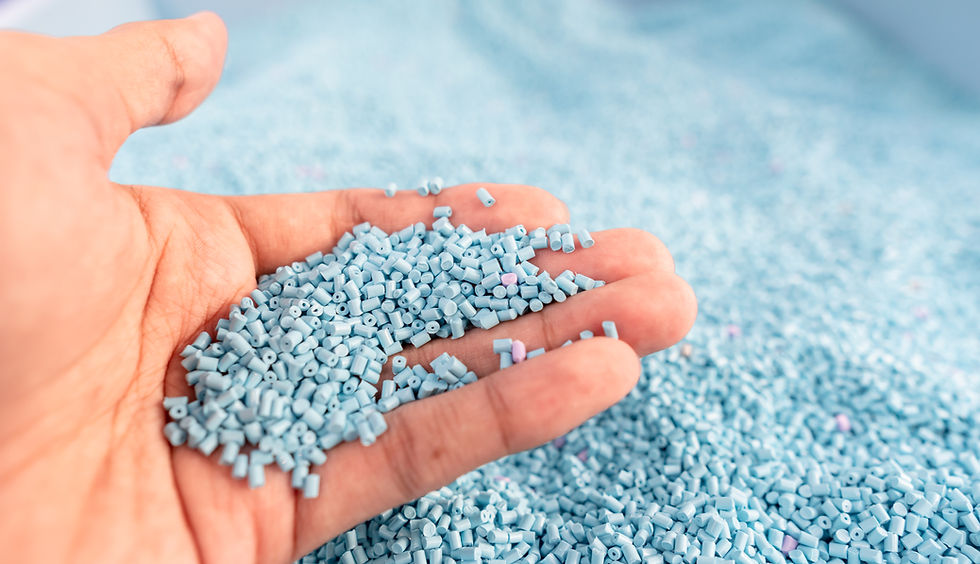
Since the first piece of plastic pollution was discovered in the oceans in the 1960s. scientists have been investigating the detrimental effects plastics and microplastics have on the environment, and the damage they could have on animal and human health, but there is no easy solution to the “wicked problem”, said Schofield.
“As humans, we have created this problem over a period of 75 years, causing an environmental crisis, and one that relates also to climate change. And we have done this because plastics are convenient and useful, and because we were too slow to realise the scale of the problem they were creating. As archaeologists, we should be good at this kind of thing, with our interest in time-depth and how society changes over time.”
In his book, Wicked Problems for Archaeologists, Schofield writes a “small win approach” is needed to solve the problem: “this should be the focus, through publicising the problem and the significance and impact of small wins, to gradually change behaviours and slowly reduce the speed and scale at which the problem continues to increase.”
“However, while plastics undoubtedly create environmental harm, they are also a valuable archaeological record which provides important evidence for how that harm came about. Plastic waste is also a valuable archive, therefore, and one which probably contains the clues to resolving the problem that it presents.”
This piece was pitched and written for an outlet who butchered and published it without leaving much choice about the changes they made. I'm publishing it in it's original form because this is the piece I wanted to write.


Comments